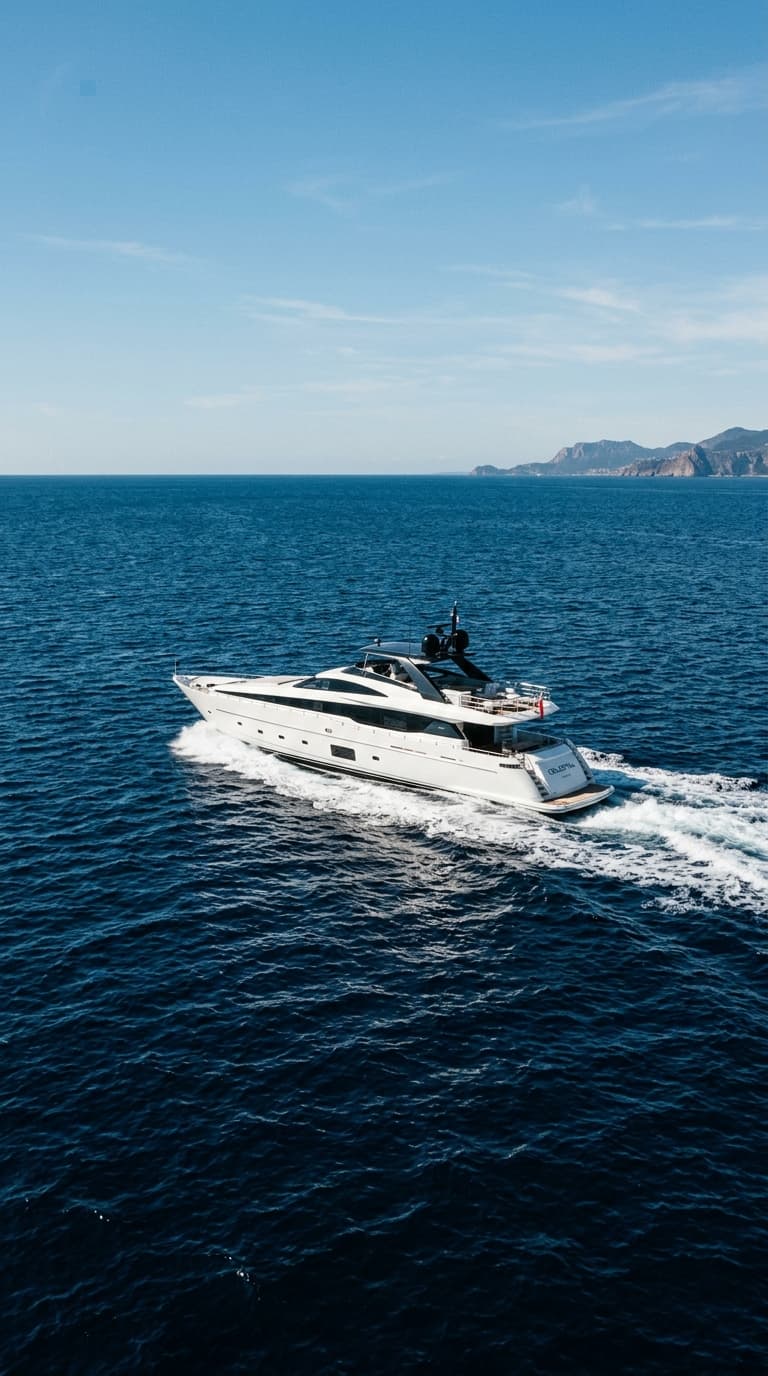
The Greek yacht charter market has seen a 25% year-over-year increase in demand, driven by a surge of interest in the Cyclades and Saronic Gulf. For experienced charterers, navigating the waters of the Aegean and Ionian seas requires more than selecting a hull; it demands an understanding of base charter rates, seasonal wind patterns like the Meltemi, and the complex regulatory framework of Greek maritime law. This guide provides an analytical breakdown of the real costs associated with chartering a luxury vessel in Greece.
Base Charter Rates and Seasonal Variations
The baseline cost of chartering a yacht in Greece is primarily dictated by the size of the vessel, its build year, and the season. High-season pricing (July and August) represents the peak financial and operational commitment. For a 50-meter motor yacht with modern stabilizers, base charter rates start between €150,000 and €250,000 per week.
Conversely, booking during the shoulder seasons (May, June, and September) offers a 20% to 40% reduction on the base rate. Beyond cost savings, the shoulder season presents calmer cruising conditions. During July and August, the Meltemi—a dry, strong northerly wind—frequently sweeps through the Aegean, particularly affecting the Cyclades. These winds can regularly reach Beaufort Force 7 or 8, potentially confining yachts to port or forcing sudden itinerary changes. Navigating during June or September reduces this risk significantly.
When planning complex multi-island itineraries, working with a platform that has direct access to local captains is critical. You can research regional yacht availability and seasonal rates through [AFFILIATE:clickandboat:greece:inline] to align your itinerary with appropriate hull types.
The Real Cost: APA, VAT, and Hidden Fees
The advertised base charter rate represents only the hull and crew. To calculate the actual cost of a Greek charter, you must factor in the Advanced Provisioning Allowance (APA), Value Added Tax (VAT), and crew gratuities.
Advanced Provisioning Allowance (APA): Typically calculated at 30% of the base charter fee, the APA is paid in advance to cover operational expenses. This includes marine fuel (which varies widely depending on whether you are cruising at 12 knots or 22 knots), high-end food and beverage requests, and dockage fees. Greek marina fees are relatively low compared to the French Riviera, but premium berths in Mykonos or Santorini can command a premium.
Value Added Tax (VAT): Greek tax regulations mandate VAT on all yacht charters. The standard VAT rate is 24%, but commercial yachts on international itineraries (e.g., crossing into Turkish waters or starting/ending in Albania) may qualify for a reduced rate of 12% or 9.6%, depending on the category of the vessel's Greek charter license.
Crew Gratuities: While discretionary, the standard industry guideline for crew tips in the Mediterranean is 10% to 15% of the base charter fee, distributed via the captain at the end of the voyage.
Greek Regulatory Challenges and Cabotage Laws
Greece enforces strict cabotage laws designed to protect local maritime assets. Legally, any yacht charter that starts and ends in a Greek port must be performed by a Greek-flagged vessel or a foreign-flagged yacht holding a valid Greek Charter License.
Non-EU flagged yachts face significant restrictions. If you choose a non-EU vessel (such as a Cayman Islands or Marshall Islands flagged yacht), the charter must technically commence or terminate in a non-EU port, such as Turkey (Bodrum) or Montenegro. Failing to structure the contract correctly can result in detention of the vessel by the Hellenic Coast Guard, heavy fines, and the immediate cancellation of your holiday.
For those looking to compare fully compliant yachts and obtain transparent quotes that factor in these regulatory requirements, utilizing Skippercity provides a clear overview of compliant vessels in the eastern Mediterranean.
Pros
- Access to some of the most diverse island groups in the world within close cruising proximity.
- Lower mooring and dockage fees compared to the Western Mediterranean (Monaco, Amalfi Coast).
Cons
- Strict cabotage laws restrict the use of certain foreign-flagged superyachts.
- Meltemi winds in July and August can disrupt scheduled itineraries, requiring flexible route planning.
Technical Verdict
Chartering a yacht in Greece requires calculating a realistic budget that adds roughly 40-50% on top of the base charter rate to cover VAT and APA. For optimal weather and value, secure a commercial-licensed displacement vessel for June or September at least eight months in advance.
→ Secure Your Greek Yacht Charter