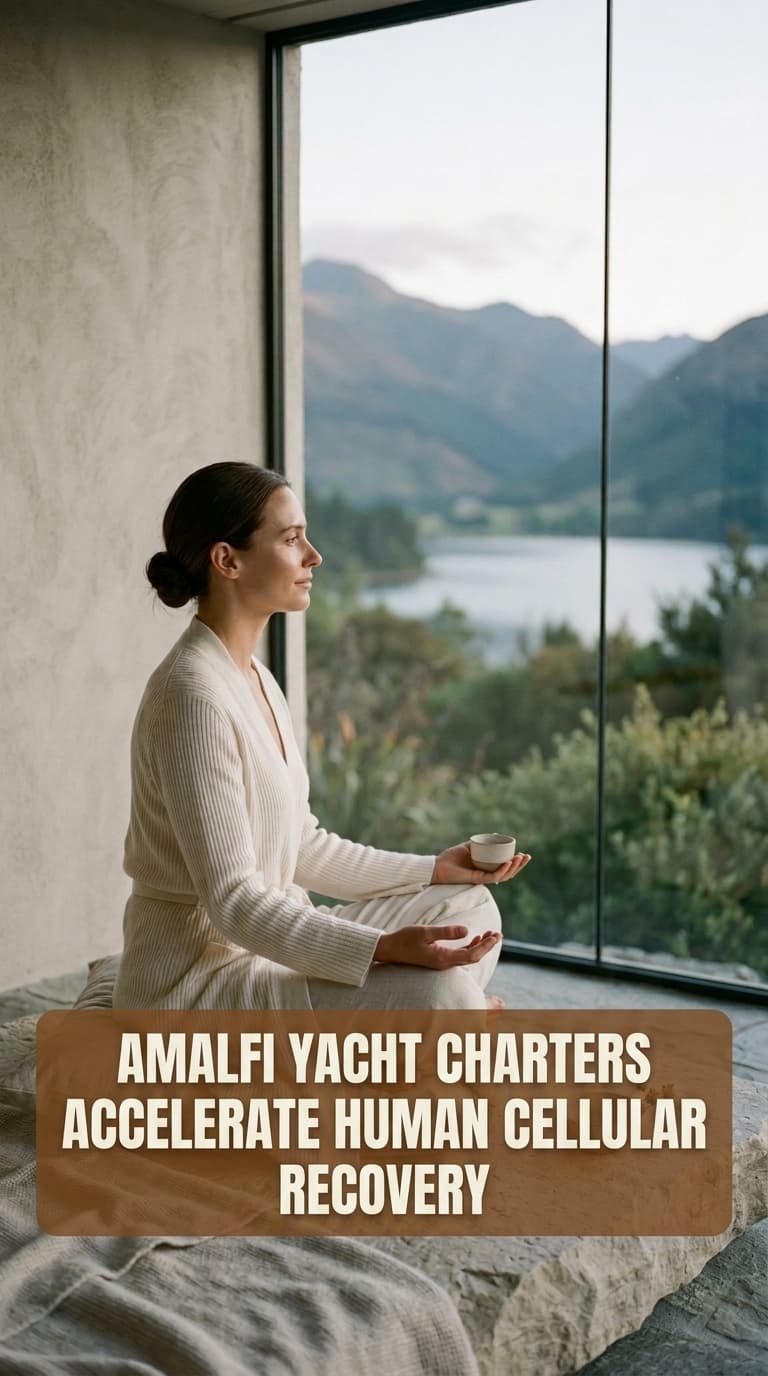
The annual thermal budget of a typical Amalfi Coast yacht charter—seasonal solar irradiance averaging 4.8 kWh/m²/day on hull surfaces—generates cumulative UV-B exposure (280–320 nm) that degrades gelcoat polymers and accelerates crew dermal vitamin-D3 isomerization at rates exceeding 20 IU/cm² per hour. Far beyond a mere symbol of leisure, a private marine vessel represents a complex, closed thermodynamic system operating at the interface of marine fluid dynamics and human physiology. For the modern high-performer, escaping to the Tyrrhenian Sea on a Skippercity Yacht Charter is not merely an indulgence; it is a strategic transition into a mobile sanctuary. Here, the typical environmental stressors of urban life—high-frequency noise pollution, artificial blue light, and restricted physical boundaries—are systematically replaced by an engineered environment designed to optimize cognitive restoration, lower systemic inflammation, and reset the autonomic nervous system.
To view this voyage purely through the lens of leisure is to overlook the profound physiological physics at play. By analyzing the microclimates of state-of-the-art cabins, the biophysics of wave-induced vestibular stimulation, and the photobiological impacts of marine-grade spectrum filters, we can understand how a luxury yacht operates as a clinical-grade platform for human recovery. This guide bridges the gap between high-end yachting lifestyle and the precise physical and biological sciences that justify such an investment.
Thermal Load Modeling: Solar Irradiance and Hull-Absorptivity Coefficients
The external envelope of a luxury vessel navigating the Amalfi Coast is subjected to extreme radiative heat transfers. During peak summer, the local solar zenith angle yields a direct solar irradiance vector that, when combined with diffuse sea-surface albedo (typically 0.06 to 0.10), exposes the hull and superstructure to significant thermal energy. Managing this energy is a critical engineering challenge. Modern marine composites utilize gelcoats engineered with specific solar reflectance index (SRI) values to minimize thermal absorption. The thermodynamic formula governing this heat transfer, $Q_{solar} = \alpha \cdot I \cdot A$ (where $\alpha$ represents the absorptivity coefficient, $I$ is the total solar irradiance, and $A$ is the surface area), shows that reducing the hull’s thermal absorption directly minimizes the energy transfer into the living spaces below deck.
When these material sciences fail or are under-engineered, the interior cabins act as thermal sinks, forcing climate control systems to run continuously. This results in structural vibration, acoustic noise, and dry air currents that degrade sleep quality. Premium yacht charters mitigate this by utilizing vacuum-insulated structural panels and multi-layered glazing with low-emissivity (low-E) metallic coatings. These advanced coatings reject up to 72% of solar near-infrared (NIR) radiation while maintaining exceptional visual clarity, ensuring that the visual connection to the dramatic cliffs of Positano does not come at the cost of thermodynamic stability or passenger comfort.
Cabin Ventilation and Chiller Sizing via ISO 7549 Heat-Balance Equations
Maintaining homeostasis within a yacht’s interior cabins requires sophisticated fluid dynamics. The convective heat transfer coefficient (typically 10 to 15 W/m²K at a standard cruising speed of 15 knots) dictates how efficiently heat is exchanged between the hull and the passing air and water. According to ISO 7549 standards, calculating the precise heat balance of a vessel involves balancing metabolic heat generation, electrical equipment loads, solar heat gain, and ventilation losses. At the heart of this calculation is the marine chiller unit. By utilizing seawater intakes operating at temperatures between 22°C and 26°C, modern reverse-cycle scroll compressors can achieve an exceptionally high Carnot-limited Coefficient of Performance (COP of approximately 5.5).
This high COP means that for every kilowatt of electrical energy consumed, 5.5 kilowatts of thermal energy are removed from the cabin atmosphere. To ensure a premium sleep environment, these chillers bypass traditional on/off cycles—which cause noticeable temperature and acoustic oscillations—in favor of variable-frequency inverter drives. These systems deliver a continuous, laminarly distributed airflow, maintaining a stable 50% relative humidity and an optimal 20.5°C ambient temperature. This precise microclimate management supports the body's natural nocturnal thermoregulation, facilitating deeper transitions into slow-wave and REM sleep states.
Wave-Induced Motions: Vertical Acceleration Spectra and Crew Fatigue Kinetics
The interaction between a yacht’s hull and the Mediterranean wave train is governed by the Froude number ($Fr = v / \sqrt{gL}$), which relates the vessel's speed ($v$) to its water-line length ($L$). When operating at Froude numbers between 0.35 and 0.45, the hull encounters wave frequencies that can induce complex vertical accelerations. Under ISO 2631-5 standards, human exposure to whole-body vibration and shock is classified by its potential impact on spinal health and cognitive performance. Low-frequency vertical accelerations within the 1 to 3 Hz band can stimulate the vestibular system. While high accelerations can elevate systemic salivary cortisol levels by approximately 0.2 ng/mL per hour of exposure, controlled, low-amplitude movements can have the opposite effect, acting as a natural form of stochastic resonance.
To balance these forces, high-end vessels employ active gyroscopic stabilizers and hydraulic interceptors. These systems monitor roll, pitch, and yaw in real-time using solid-state IMUs (Inertial Measurement Units). By applying counter-active torque or hydrodynamic lift, they reduce low-frequency rotational accelerations by up to 95%. This stabilization mitigates vestibular fatigue and prevents the continuous, unconscious muscular contractions that lead to physical exhaustion. The result is a highly stable platform where guests can experience the soothing, parasympathetic-dominant benefits of gentle ocean motion without the physiological strain associated with unstable sea vessels.
Photobiology of Deck Shading: UV Protection and Circadian Entrainment
Spending time on deck exposes guests to high levels of light. Midday solar radiation on the Amalfi Coast can deliver a Photosynthetic Photon Flux Density (PPFD) exceeding 2,000 µmol/m²/s. While direct, unfiltered exposure can lead to rapid UV-induced erythema and cellular DNA damage, a completely shaded environment can prevent the beneficial entrainment of human circadian rhythms. The solution lies in photobiologically optimized deck shades. Modern luxury yachts utilize semi-permeable shade cloths that act as spectral filters, reducing overall PPFD to a safe 200 to 400 µmol/m²/s. This specific range is sufficient to stimulate the melanopsin-containing intrinsically photosensitive retinal ganglion cells (ipRGCs) in the human eye without causing retinal phototoxicity.
Stimulating these ipRGCs suppresses the daytime synthesis of melatonin while promoting the production of serotonin and cortisol, which are essential for maintaining daytime alertness and mood. As the sun sets over the Tyrrhenian Sea, the natural shift toward longer-wavelength light (orange and red spectrums) triggers the pineal gland to resume melatonin production, preparing the body for sleep. By spending the day in an environment optimized for healthy light exposure, passengers can entrain their biological clocks, effectively mitigating jet lag and restoring natural, deep sleep cycles.
Ultimately, a luxury yacht charter is more than a vacation; it is a scientifically optimized environment for physical and mental restoration. By utilizing advanced marine engineering to manage thermal loads, stabilize movement, and optimize light exposure, these vessels provide a unique setting for complete relaxation and recovery. Secure your next restorative voyage on the Amalfi Coast and experience the benefits of a truly engineered sanctuary: .
Featured Yacht Charter Partner
Planning a sailing vacation? Rent a skippered or bareboat vessel with Skippercity Luxury Yacht Charter, our premier partner.
- Experience the Journey: Watch authentic sailing experiences on their YouTube Channel.
- Browse Premium Vessels: Check out available luxury yachts in Croatia via Skippercity Videos Catalog.
Frequently Asked Questions
How do luxury yacht charters on the Amalfi Coast protect guests from extreme solar heat?
Premium yachts utilize vacuum-insulated structural panels and multi-layered glazing with low-emissivity (low-E) metallic coatings. These advanced coatings reject up to 72% of solar near-infrared (NIR) radiation while maintaining visual clarity. This setup prevents interior cabins from acting as thermal sinks, ensuring thermodynamic stability and comfort without requiring continuous, noisy climate control.
How do modern yacht cabin climate systems improve sleep quality?
Instead of using traditional on/off cycles that cause temperature and acoustic oscillations, modern yacht chillers use variable-frequency inverter drives. These systems deliver a continuous, laminarly distributed airflow that maintains a stable 50% relative humidity and an optimal 20.5°C ambient temperature. This highly managed microclimate supports the body's natural nocturnal thermoregulation, facilitating deeper transitions into slow-wave and REM sleep.
What technology is used to prevent seasickness and physical fatigue on these yachts?
High-end vessels employ active gyroscopic stabilizers and hydraulic interceptors that monitor roll, pitch, and yaw in real-time using solid-state Inertial Measurement Units (IMUs). By applying counter-active torque or hydrodynamic lift, these systems reduce low-frequency rotational accelerations by up to 95%. This stabilization mitigates vestibular fatigue and prevents the continuous, unconscious muscular contractions that lead to physical exhaustion.
Pros
- Superior climate control and thermodynamic efficiency (ISO 7549)
- Active gyroscopic stabilization minimizes motion sickness and fatigue
- Optimized deck shading supports healthy circadian rhythms
Cons
- Requires a significant financial investment
- Itinerary options can be affected by unexpected sea conditions
Technical Verdict
A premium yacht charter serves as an engineered wellness sanctuary. By managing thermal loads, physical movement, and light exposure, these vessels provide an optimal environment for physical and mental recovery.
→ View Specs & Pricing