Navigating the dramatic vertical cliffs of the Amalfi Coast is best executed from the water, but the financial architecture of chartering varies wildly depending on your hull configuration. High-net-worth charterers routinely face a choice between the expansive volume of a luxury catamaran and the speed and prestige of a classic motor yacht. While both options grant access to exclusive anchorages off Positano and Capri, their operational cost profiles, fuel burns, and crew requirements are radically divergent. To optimize your Mediterranean charter strategy, it is essential to understand the true cost of chartering, factoring in base rates, local taxes, and the Advanced Provisioning Allowance (APA). Before finalizing your itinerary, comparing platforms like Skippercity is crucial for establishing baseline market rates.
Base Charter Rates and Seasonal Surges
Base charter rates represent the bare minimum entry cost to secure a vessel before any operational expenses are calculated. For a premier catamaran charter, such as a Lagoon 620 or a Sunreef 70, expect weekly base rates to range between €20,000 and €50,000 during the shoulder seasons. In contrast, a mid-sized motor yacht (typically 24 to 40 meters, such as a Sanlorenzo SD96 or a Benetti Oasis) starts at €50,000 and easily scales past €200,000 per week for larger displacement vessels managed by top-tier brokers like Fraser Yachts and Burgess Yachts.
Timing heavily dictates these base rates. The peak Mediterranean season of July and August commands a strict 20% to 30% premium across all classes, and inventory must be secured up to nine months in advance. During this period, owners rarely accept charters shorter than seven days, meaning fractional or weekend trips are virtually non-existent.
The Fuel and Operational Cost Discrepancy
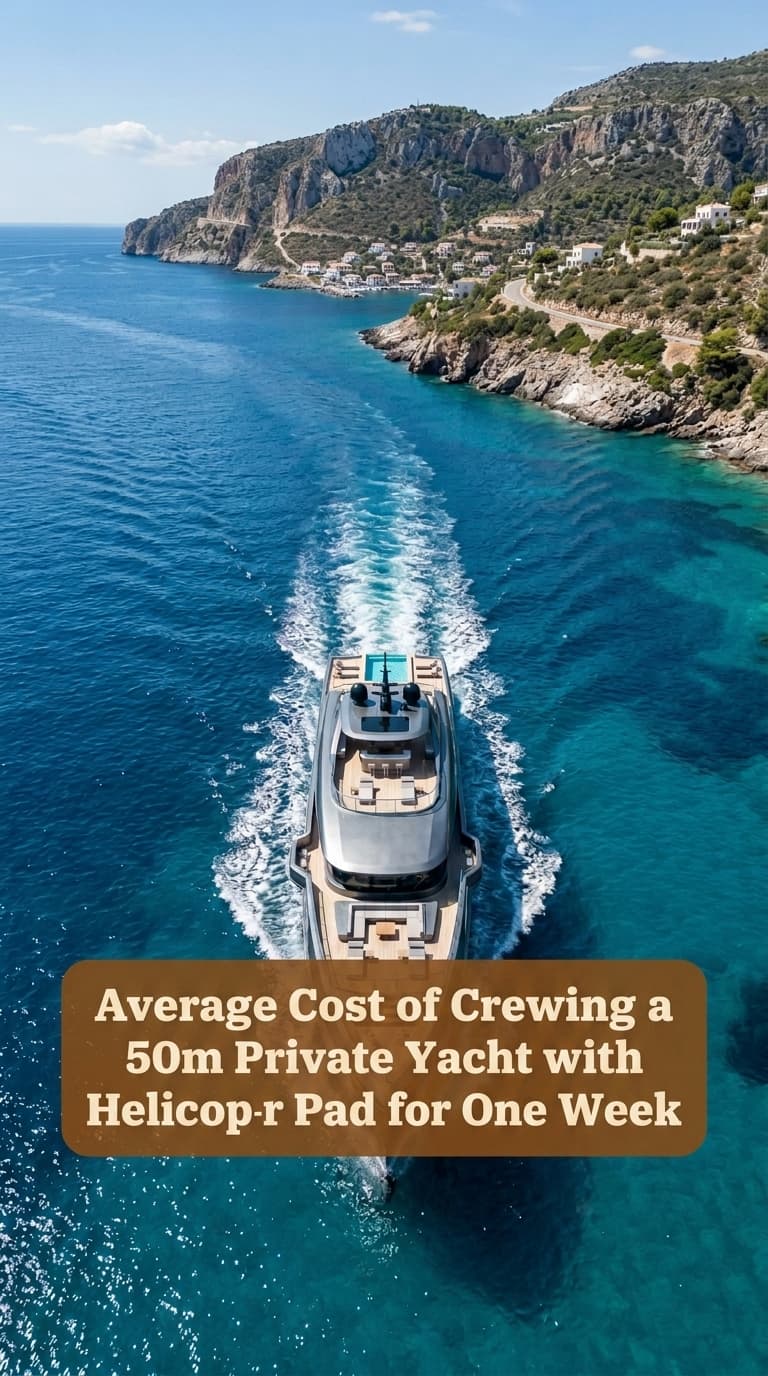
Fuel consumption is the single most volatile variable in yacht chartering, and it represents the primary cost differentiator between hull types. A luxury motor yacht cruising at 15 to 18 knots will burn between 250 and 800 liters of diesel per hour. Translating this to an Amalfi itinerary, such as motoring from Naples to Capri, then onward to Positano and Amalfi, translates to approximately €1,500 to €3,500 per day in fuel alone.
Conversely, multi-hull catamarans are highly efficient. Under sail, their fuel consumption is zero. Even when motoring with twin diesels to maintain a schedule, a 60-foot catamaran burns a negligible 20 to 50 liters per hour, resulting in a daily fuel bill of less than €300. This dramatic efficiency gap has fueled a significant market trend: experienced luxury charterers are increasingly pivoting toward eco-conscious hybrid catamarans like the Sunreef 80 Eco, which use solar arrays and electric propulsion to minimize both carbon footprint and operational overhead. For those looking to evaluate these multi-hull efficiencies alongside traditional monohulls, comparing fleet listings through specialized networks is highly recommended.
Advanced Provisioning Allowance and Port Fees
The base charter rate is only the starting point. To cover operational expenses, charterers must pay an Advanced Provisioning Allowance (APA), which is managed by the yacht's captain as a dedicated expense account. For motor yachts, the standard APA is 30% to 40% of the base charter fee, driven by heavy fuel burn and high crew-to-guest ratios. For catamarans, the APA is typically lower, around 20% to 25%, reflecting their modest fuel requirements.
On the Amalfi Coast, port fees can decimate an APA if not managed carefully. Docking in the exclusive Marina Grande in Capri during July or August can cost upwards of €2,500 to €4,000 per night, assuming you can secure a berth. Positano has no protected harbor, meaning yachts must use local mooring buoys, which cost a more reasonable €300 to €600 per night, inclusive of water taxi transfers. Crew gratuities, while discretionary, are customary at 10% to 15% of the base charter fee in the Mediterranean, representing another major capital outlay. using platforms like Skippercity can help you accurately model these ancillary fees before committing to a contract.
Charter Contracts and Booking Logistics
Almost all high-end luxury charters along the Amalfi Coast are executed using the MYBA (Mediterranean Yacht Brokers Association) charter agreement. This standardized contract protects both parties, clearly defining the obligations of the owner, charterer, and crew. When booking through elite brokerages like Northrop & Johnson, your funds are held in a secure escrow account until the charter commences.
If your primary goal is island hopping, coastal dining at places like Conca del Sogno, and relaxed bay anchoring, a modern luxury catamaran offers superior interior volume, stability at anchor, and massive deck space for a fraction of the total operational cost. But if your itinerary requires rapid transit times, absolute prestige, and a highly structured, silver-service crew environment, a motor yacht remains the gold standard. To begin securing your vessel and comparing real-time quotes for the upcoming season, initiate your search early with a trusted broker.
Frequently Asked Questions
What are the base charter rates for a luxury catamaran vs. a motor yacht on the Amalfi Coast?
Weekly base rates for a premier catamaran, such as a Lagoon 620 or Sunreef 70, range between €20,000 and €50,000 during the shoulder seasons. In contrast, a mid-sized motor yacht starts at €50,000 per week and can easily scale past €200,000 for larger displacement vessels. Both options will also face a strict 20% to 30% premium if booked during the peak season of July and August.
How much does fuel cost for a yacht charter on the Amalfi Coast?
Fuel costs vary drastically depending on the type of vessel you choose. A luxury motor yacht cruising at 15 to 18 knots burns between 250 and 800 liters of diesel per hour, translating to roughly €1,500 to €3,500 per day. Meanwhile, a 60-foot catamaran burns zero fuel under sail and only 20 to 50 liters per hour when motoring, resulting in a daily fuel bill of less than €300.
What is the Advanced Provisioning Allowance (APA) and how much should I expect to pay?
The Advanced Provisioning Allowance (APA) is an expense account managed by the yacht's captain to cover operational expenses during your charter. For motor yacht charters, the standard APA is 30% to 40% of the base charter fee due to heavy fuel burn and high crew-to-guest ratios. For catamaran charters, the APA is typically lower, averaging around 20% to
Related Reading
Pros
- Catamarans offer double the living space of similar-length monohulls and excellent stability at anchor.
- Motor yachts offer rapid transit speeds, allowing you to easily cover Naples, Capri, and Positano in a single afternoon.
- Catamaran fuel costs are negligible, saving up to €15,000 per week compared to motor yachts.
Cons
- Motor yachts carry high fuel burns (up to €3,500/day) and rigid 35-40% APA requirements.
- Catamarans have wider beams, making it exceptionally difficult and expensive to secure tight slips in historic Amalfi harbors.
- Italian 22% VAT applies strictly to all Italian-start charters under standard EU tax rules.
Technical Verdict
For an Amalfi Coast itinerary where distances between destinations are short, a luxury catamaran offers unmatched cost efficiency and stable deck space. However, if your preference leans toward high-speed transits and prestigious onboard entertaining, a motor yacht from a premier broker remains the definitive choice.
→ Compare Quotes