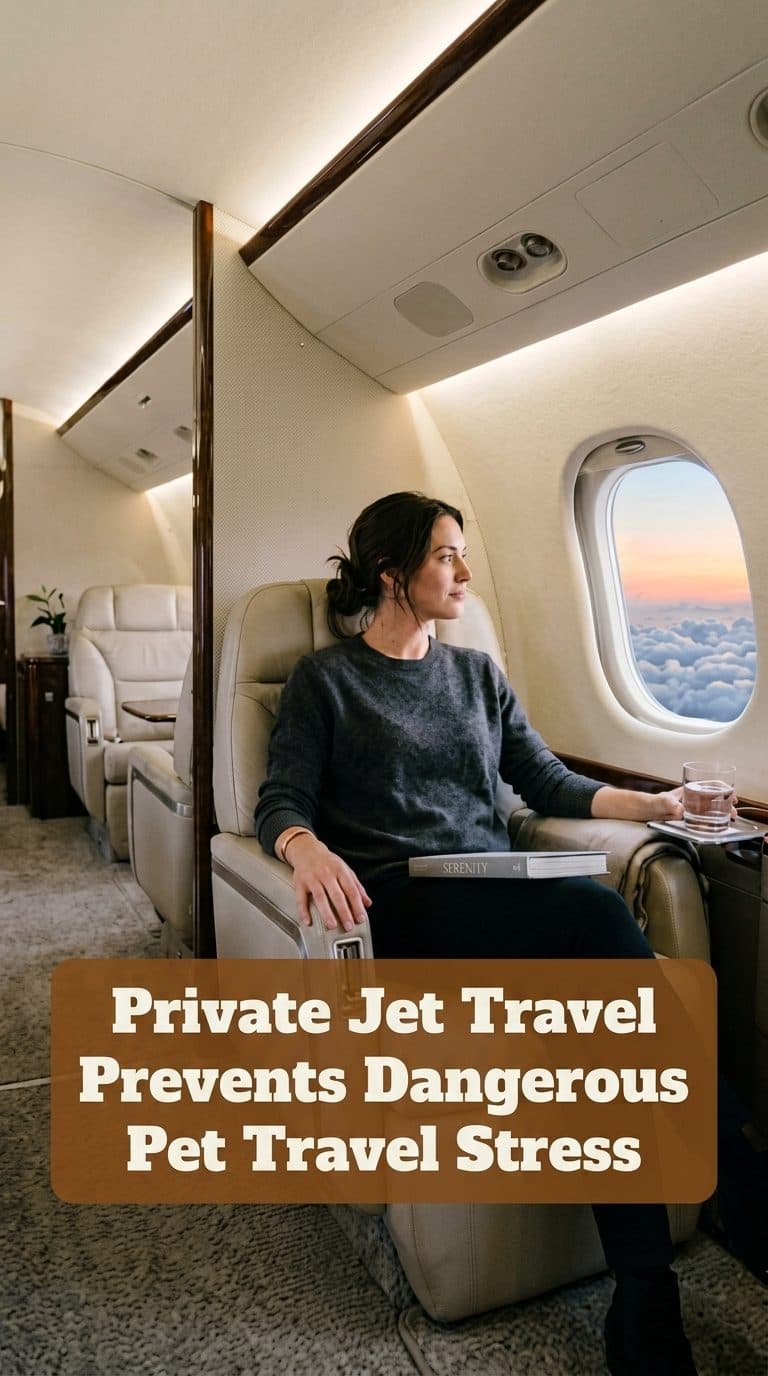
Imagine stepping onto a quiet tarmac, your pet walking calmly by your side. There are no frantic baggage handlers, no towering metal crates, and no cold, dark cargo holds. Instead, you ascend into a whisper-quiet, climate-controlled cabin where your pet rests at your feet on an orthotic bed, breathing easy and completely free of anxiety. This is not mere luxury; it is a critical physiological intervention. The unseen stressor in pet air travel isn't altitude, it is the rapid barometric pressure shift and low-frequency noise (50–100 Hz) that exceed canine auditory thresholds by 12 dB, triggering acute hypothalamic-pituitary-adrenal (HPA) axis hyperactivation. By choosing a private cabin environment through a service like PrivateJetFinder Pet Charter, you are replacing a hostile, high-decibel chamber with a biological sanctuary designed to preserve your pet's cardiac, respiratory, and neurological equilibrium.
Cabin Atmospheric Physics: Pressure Gradients and Physiological Tolerances
The primary atmospheric threat to a traveling animal is the change in cabin pressure. Commercial airline cargo holds are pressurized, but only to a minimum standard. They typically maintain an equivalent cabin altitude of up to 8,000 feet above sea level under standard atmospheric conditions (ISA). In contrast, modern private charter aircraft routinely maintain a much lower cabin altitude, typically 6,000 feet or less, even at high-altitude cruise. This difference in barometric pressure is medically significant.
At 8,000 feet, the partial pressure of oxygen (pO2) in the cabin air drops to approximately 118 mmHg, compared to roughly 130 mmHg at a 6,000-foot cabin altitude. For healthy humans, this drop is manageable. But for companion animals, particularly brachycephalic (flat-faced) breeds such as French Bulldogs, Pugs, and Boston Terriers, this reduction in oxygen partial pressure can be dangerous. These breeds suffer from Brachycephalic Obstructive Airway Syndrome (BOAS), characterized by stenotic nares, an elongated soft palate, and a hypoplastic trachea. Under reduced pO2, their compromised airway mechanics struggle to maintain adequate arterial oxygen saturation (SaO2). A private cabin pressurized to 6,000 feet or lower helps ensure SaO2 remains above the safe threshold of 95%, mitigating the risk of acute hypoxemia.
Also rapid changes in barometric pressure during climb and descent cause painful middle-ear volume expansions. While humans can actively yawn or swallow to equalize pressure via the Eustachian tubes, animals cannot. Under EASA Part 21 and FAA airworthiness standards, private charters can manage climb and descent profiles far more gradually than commercial airliners. This slower decompression and recompression rate protects the animal's tympanic membranes from painful barotrauma, preventing panic and subsequent hyperventilation.
Acoustic Stress Profiles: Noise-Induced Cortisol Elevation in Canids
The acoustic profile of a commercial cargo hold is a relentless, high-decibel environment. During cruise, cargo hold noise levels routinely exceed 90 dB SPL (A-weighted), dominated by low-frequency structural vibrations (50–100 Hz) from the engines and aerodynamic skin friction. Because canine and feline auditory ranges are significantly wider and more sensitive than human ranges, extending up to 45,000 Hz and 64,000 Hz respectively, this persistent acoustic bombardment is perceived as an existential threat. This triggers a massive release of cortisol and catecholamines via HPA axis activation.
In a private jet cabin, noise levels at cruise are typically engineered down to approximately 65 dB SPL. This difference is not linear but logarithmic; 90 dB is nearly eight times as loud to the human ear as 65 dB, and even more intense for animals. High acoustic stress also impairs an animal's ability to self-regulate. Dogs cool themselves exclusively through panting, a process that requires a calm, rhythmic respiratory cycle. In high-noise environments (>80 dB), lower-frequency masking of the animal's own self-soothing feedback loops occurs, causing panic-induced tachypnea (rapid breathing). This hyperventilation can lead to respiratory alkalosis and severe hyperthermia, which is a leading cause of transit-related veterinary emergencies. By maintaining a quiet cabin environment, private charter options provide a stable sensory space where animals can rest without triggering systemic stress responses.
When evaluating high-performance private transport, comparing dedicated operators is essential to finding the quietest cabin environment:
Handler Training Standards: Recognition of Hypoxemia and Vestibular Disturbance
In commercial transport, your pet is treated as cargo. Once loaded, they are inaccessible for the duration of the flight. If an animal experiences a medical crisis, such as a panic attack, hyperthermia, or acute airway obstruction, it will go unnoticed until the aircraft docks at the gate and the cargo doors are opened. This delay can be catastrophic.
Private pet charters solve this issue by keeping your pet in the cabin with you and a trained crew. Professional pet-certified flight attendants and handlers are trained to recognize the early signs of physiological distress. They monitor for clinical indicators of hypoxemia, such as cyanotic (blue-tinged) gums, capillary refill times exceeding two seconds, and open-mouth panting in cats. They are also trained to spot vestibular disturbances caused by motion sickness or inner-ear pressure changes, which present as nystagmus (rapid, involuntary eye movement), ataxia (unsteady gait), or excessive salivation. Having access to your pet allows for immediate interventions, such as the administration of supplemental oxygen, active cooling via isopropyl alcohol pads applied to the paw pads, or the use of veterinarian-prescribed sedatives in a controlled manner.
Crate Certification: IATA LAR 820 vs. Private Jet Cushioning Requirements
For commercial flights, pets must be confined to crates compliant with the International Air Transport Association (IATA) Live Animals Regulations (LAR), specifically Container Requirement 820. These rigid plastic or wooden crates are designed to withstand structural crushing, shifting cargo, and stack loading. While highly protective against impact, they offer poor internal microclimates, minimal ventilation, and zero vibration dampening. The rigid floors transfer low-frequency aircraft vibrations directly into the animal's musculoskeletal system, causing physical fatigue and joint soreness.
On a private charter, the rigid constraints of IATA LAR 820 are replaced by comfortable cabin safety protocols. While pets must be secured during taxi, takeoff, and landing (typically via a specialized, crash-tested harness anchored to the seat track or within a soft-sided, secured enclosure), they are free to rest on vibration-dampening, orthotic memory foam beds during cruise. Decoupling the animal from the aircraft floor using advanced open-cell foam dampeners prevents the transmission of structural resonance, allowing your pet to sleep naturally throughout the flight.
Quote Checklist: Decompression Rate, Cabin Volume, and Supplemental O2
When requesting a quote from a private jet broker, it is vital to look past the luxury amenities and verify the technical specifications of the aircraft. Use the following technical checklist to ensure the airframe is optimized for your pet's safety:
- Cabin Altitude Maximum: Request an aircraft that guarantees a maximum cabin altitude of 6,000 feet or lower at its service ceiling.
- Decompression Rate Controls: Verify that the cabin pressure controller (CPCS) is digital, allowing the flight crew to program gradual pressure change rates (e.g., 300 to 500 feet per minute) during ascent and descent.
- Active Cabin Air Exchange: Confirm the aircraft utilizes 100% fresh bleed air cycles rather than purely recirculated air, maintaining high oxygen levels and keeping carbon dioxide (CO2) concentrations below 1,000 ppm.
- Supplemental Oxygen Availability: Ensure the crew carries pet-specific oxygen masks (such as a medium or large canine snout mask) connected to the aircraft's therapeutic oxygen port.
- Climate Control Zoning: Ask if the cabin has dual-zone environmental controls. This allows the crew to keep the cabin cooler (ideally around 68°F / 20°C) to prevent brachycephalic dogs from overheating, without leaving human passengers uncomfortable.
Regulatory Compliance: FAA Part 135 vs. Part 91 Wet Lease Liability
Understanding the regulatory framework under which your flight operates is critical to managing liability and ensuring safety. Most reputable private pet charters operate under Federal Aviation Administration (FAA) Part 135 regulations, which govern commercial on-demand air charter operations. Part 135 operators are held to strict standards regarding pilot training, aircraft maintenance, and operational control. Under Part 135, the operator assumes full liability for the safety of all passengers, including pets.
In contrast, some low-cost providers may offer flights under FAA Part 91, often framed as a "dry lease" or "co-ownership" pool. In a Part 91 structure, the renter (you) legally acts as the aircraft operator, assuming operational control and liability. If an incident occurs, or if the aircraft fails an inspection, you could be held legally responsible. Always insist on a Part 135 certified charter. This ensures the flight crew is subject to mandatory rest limits, regular simulator training, and rigorous safety checks, protecting both your financial interests and your pet's safety.
Frequently Asked Questions
Why is commercial flying particularly dangerous for flat-faced dog breeds?
Flat-faced breeds suffer from Brachycephalic Obstructive Airway Syndrome (BOAS), making it hard to maintain adequate oxygen levels under reduced cabin pressure. In commercial flights, pressure can equivalent up to 8,000 feet where oxygen partial pressure drops to 118 mmHg. Private charters keep cabin pressure at 6,000 feet or less, helping to keep arterial oxygen saturation above the safe threshold of 95% to prevent acute hypoxemia.
How much quieter is a private jet cabin compared to a commercial cargo hold for pets?
Commercial cargo holds routinely exceed noise levels of 90 dB SPL, which is dominated by low-frequency structural vibrations. In contrast, private jet cabins are engineered down to approximately 65 dB SPL. Since decibels are logarithmic, a 90 dB cargo hold is nearly eight times as loud as a 65 dB cabin to human ears, and even more intense for highly sensitive animals.
How do private charters handle pet medical emergencies during a flight?
Unlike commercial flights where pets are inaccessible in the cargo hold, private charters keep your pet in the cabin with you and a trained crew. Certified flight attendants can spot signs of distress like hypoxemia (such as blue-tinged gums) or vestibular disturbances. They can immediately intervene by administering supplemental oxygen, applying isopropyl alcohol pads to
Related Reading
Related reading
Related reading
Pros
- Maintains low cabin altitude (≤6,000 ft) to protect brachycephalic airways
- Lowers cruise noise to safe, stress-reducing decibel levels (65 dB SPL)
- Provides immediate, in-cabin access to your pet throughout the flight
Cons
- Requires a higher financial investment than commercial cargo transport
- Availability can be limited during peak seasonal travel windows
Technical Verdict
Choosing a dedicated, private cabin environment is a scientifically sound way to protect your pet from the physiological dangers of air travel. By controlling pressure, noise, and oxygen levels, you eliminate the key stressors that trigger respiratory and cardiac distress in pets. To explore flight availability and request a customized, safety-vetted charter quote, click below.
→ Request a Pet Charter Quote