For high-net-worth charterers, a helipad is no longer merely an aesthetic statement, it is a critical logistical tool. smooth transitions from private jet terminals to vessels anchored offshore eliminate customs bottlenecks, tender transfers, and coastal traffic. But integrating aviation capabilities with superyacht charters introduces highly rigid regulatory, structural, and financial frameworks. Successfully executing a "fly-on/fly-off" charter requires a precise understanding of deck certifications, aircraft compatibility, and operational crew capabilities.
Heli-Deck Classifications: Commercial vs. Touch-and-Go
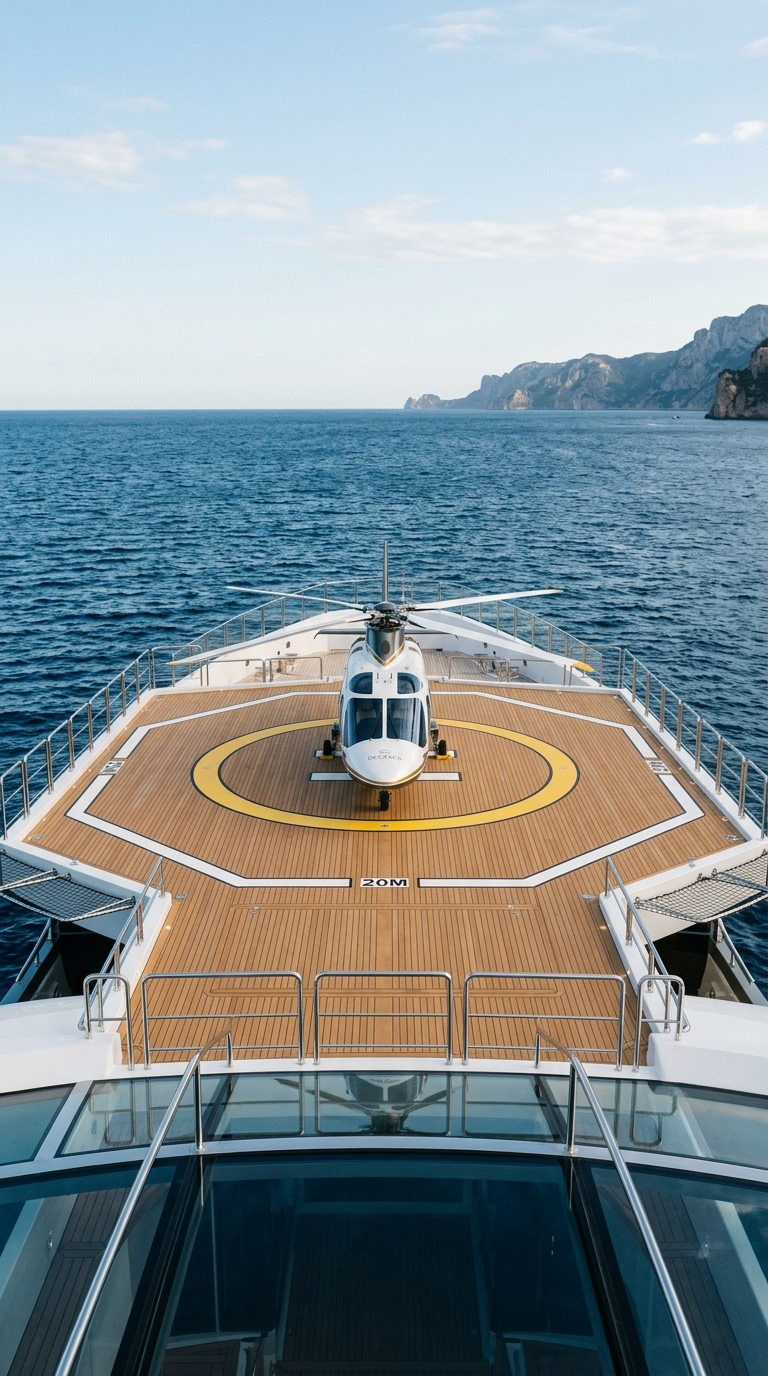
The primary distinction in superyacht aviation is between a fully certified commercial helideck and a "touch-and-go" platform. A touch-and-go deck is designed solely for picking up and dropping off passengers. Under maritime law and national aviation authority rules, helicopters cannot remain parked on these decks, nor can they be refuelled or serviced. For travelers seeking smooth itinerary planning across the Mediterranean, chartering a vessel with the correct classification is paramount. To secure a vessel with verified flight deck capabilities, experienced charterers often coordinate through specialized regional brokers. You can consult Skippercity to assess available inventory with certified helidecks.
Conversely, fully certified commercial helidecks comply with strict international standards, such as the UK Maritime and Coastguard Agency's (MCA) CAP 437. These decks are engineered to support the structural load of specific aircraft weights, feature flush-mounted tie-down points, contain integrated foam firefighting systems, and have dedicated aviation fuel tanks. To operate a commercial deck, the yacht's crew must include a certified Helicopter Landing Officer (HLO) and trained deckhands, adding to the operational complexity and crew payroll.
Aircraft Compatibility and Structural Limits
You cannot land any helicopter on any yacht deck. Helicopter weight and rotor diameter (D-value) must align perfectly with the yacht's structural engineering. Standard light twin-engine helicopters, such as the AgustaWestland AW109, require a deck capable of supporting a maximum takeoff weight (MTOW) of approximately 3.2 metric tons and a D-value of at least 13 meters.
For larger utility aircraft like the Airbus H145 or the heavy-duty Sikorsky S-76 (commonly used for longer transfers up to a 150 nautical mile range), the yacht must feature a substantially larger deck. An S-76 requires a deck rated for at least 5.3 metric tons. Attempting to land an incompatible aircraft risks catastrophic structural damage to the vessel's upper superstructure and immediate denial of landing clearance by the captain.
The Financial Premium of Aviation Integration
Aviation capability comes at a steep premium. Superyachts equipped with certified helipads command weekly rates that are 20% to 30% higher than non-aviation yachts of comparable size. For vessels in the 50-meter-plus category, base charter rates generally range between €400,000 and €600,000 per week, with daily rates starting at €50,000.
These rates do not include the cost of the helicopter charter itself, aviation fuel, or the specialized insurance riders required for landing in territorial waters. Also demand for these specialized vessels is highly seasonal. During the peak Mediterranean season (July, August) and Caribbean season (December, March), helipad-certified yachts experience a 50%+ premium on standard rates and typically require booking at least six to nine months in advance.
Regulatory Compliance and Airspace Permitting
Operating a helicopter within territorial waters requires navigating a complex web of local airspace regulations. Even if a yacht is fully CAP 437 compliant, local port authorities and national coast guards retain ultimate authority over landings. For example, in many parts of the French Riviera and the Amalfi Coast, helicopter landings are strictly prohibited within 300 meters of the shoreline, requiring the yacht to steam offshore into international waters to conduct flight operations.
Every single landing requires a pre-filed flight plan, vessel coordinates, and specific local permits. This logistical burden is handled by the yacht's captain and the helicopter operator, but it requires rigid itinerary adherence. If weather conditions deteriorate or port authorities delay clearances, your flight transfer schedule will collapse, emphasizing the need for experienced maritime operators like Burgess, Fraser, or Y.CO to manage the booking.
Frequently Asked Questions
What is the difference between a commercial helideck and a touch-and-go platform on a superyacht?
A touch-and-go platform is designed solely for picking up and dropping off passengers, meaning helicopters cannot park overnight, refuel, or receive service on them. Conversely, a fully certified commercial helideck complies with strict international regulations to safely support aircraft weight, secure the helicopter with tie-down points, and provide refueling. Operating a commercial deck also requires specialized crew members, including a certified Helicopter Landing Officer (HLO) and trained deckhands.
How do I know if my helicopter is compatible with a specific yacht's helipad?
Helicopter compatibility depends on matching the aircraft's weight and rotor diameter (D-value) with the yacht's specific structural engineering. For instance, an AgustaWestland AW109 requires a deck rating of at least a 13-meter D-value and a 3.2 metric ton maximum takeoff weight, whereas a heavier Sikorsky S-76 requires a deck rated for 5.3 metric tons. Landing an incompatible aircraft risks causing catastrophic structural damage to the vessel's upper superstructure.
What are the average charter rates and seasonal premiums for helipad-equipped superyachts?
Superyachts featuring certified helipads command a weekly premium of 20% to 30% over similar non-aviation vessels. For yachts in the 50-meter-plus range, base rates typically run between €400,000 and €600,000 per week, with daily rates beginning at €50,000. During the peak Mediterranean and Caribbean seasons, these rates face a 50%+ premium and generally require booking six to nine months ahead.
Are there geographic or local restrictions when landing a helicopter on a yacht?
Yes, local port authorities and national coast guards have ultimate control over landings within territorial waters. For example, helicopter landings are strictly banned within 300 meters of the shoreline along parts of the Amalfi Coast and French Riviera. In these areas, the yacht must steam offshore into international waters to safely conduct any flight operations.
Related Reading
- Indonesia Superyacht Charter Komodo and Raja Ampat Guide
- Superyacht Charter Weekly Rate with Crew and Fuel 2026: The Total Cost Breakdown
- Superyacht Wellness Charter: Spa Decks, Recovery Toys, Crew Specialists, and APA Budgeting
- Four Seasons Yacht Charter vs Private Superyacht: Which Luxury Sea Experience Should You Book?
Pros
- Zero-delay transfers from regional airports directly to the vessel.
- Enhanced medical evacuation capabilities in remote cruising grounds.
- Access to heli-skiing and remote inland excursions directly from the yacht.
Cons
- Significant 20-30% premium on base charter rates.
- Strict weather dependencies that can ground flights and disrupt itineraries.
- Heavy regulatory burden requiring permits for every landing in territorial waters.
Technical Verdict
When booking a helipad-equipped yacht, do not rely on marketing brochures. Demand the vessel's aviation certificate and verify whether the deck is restricted to touch-and-go operations or certified for overnight parking and refueling. Ensure your broker coordinates the yacht's D-value and MTOW limits directly with your helicopter operator to guarantee compatibility.
→ Compare Quotes