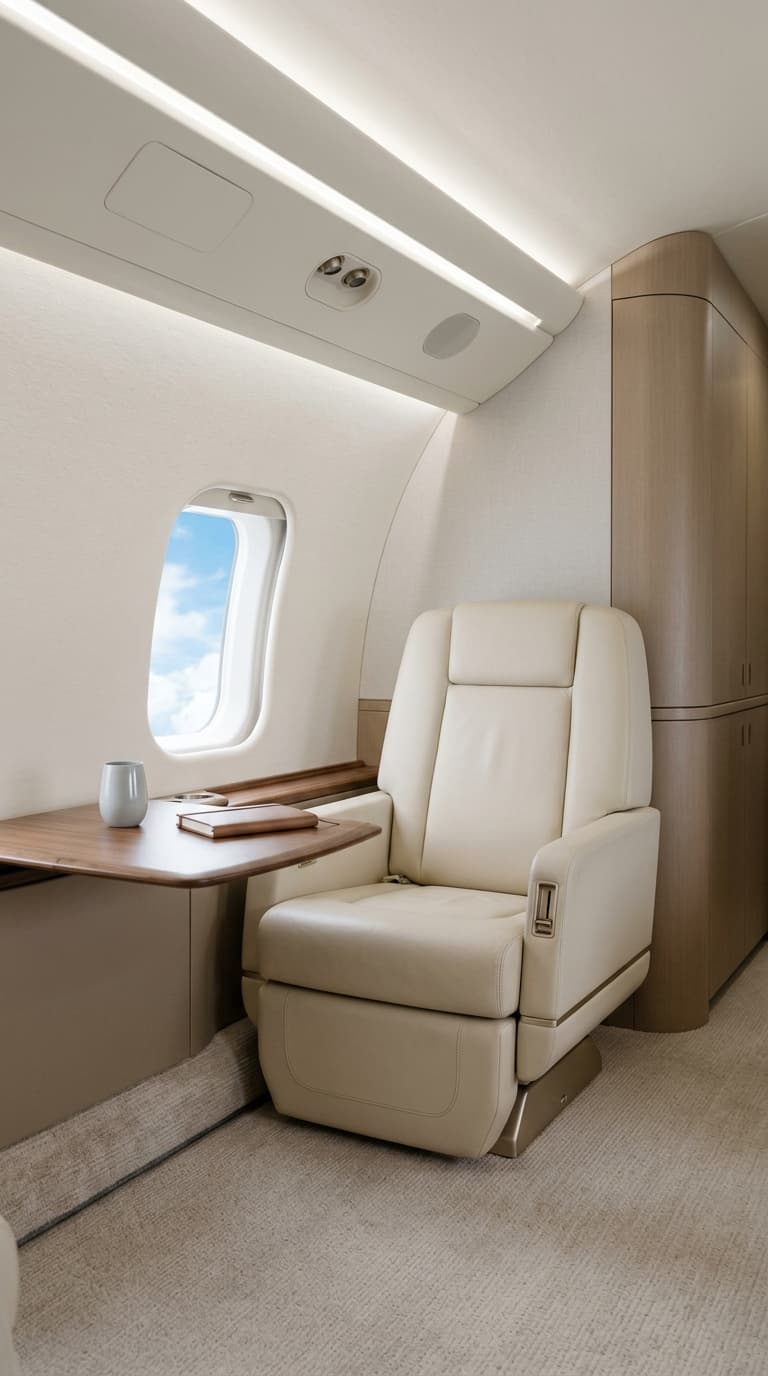
For flights exceeding 12 hours, cabin comfort ceases to be an aesthetic luxury—it is a physiological necessity. Crossing multiple time zones at high altitudes subjects the human body to physical stressors including mild hypoxia, dehydration, noise-induced fatigue, and disrupted circadian rhythms. Modern ultra-long-range (ULR) business jets, such as the Gulfstream G700, Bombardier Global 8000, and Dassault Falcon 10X, are engineered to mitigate these factors. This guide examines the mechanical, environmental, and operational logistics that define the current standard of intercontinental private aviation.
The Physics of Cabin Altitude and Environmental Control
The most significant advancement in passenger wellness is the reduction of effective cabin altitude. Traditional commercial aircraft maintain a cabin pressure equivalent to 6,000 to 8,000 feet above sea level. At this pressure, blood oxygen saturation levels drop, accelerating fatigue and jet lag.
In contrast, the Gulfstream G700 features a cabin altitude of just 2,916 feet while cruising at FL410 (41,000 feet). The Bombardier Global 8000 matches this standard, maintaining a 2,900-foot cabin at FL410. Lowering the pressure differential minimizes the cardiovascular strain on passengers, allowing them to arrive at their destinations alert and physically recovered. This environmental control is managed alongside advanced HEPA filtration systems that replace 100% of the cabin air every two to three minutes, eliminating recirculated pathogens and maintaining optimal relative humidity levels of up to 20%—significantly higher than standard commercial cabins. To secure these advanced environmental systems for your next intercontinental flight, you can consult with charter networks like Villiers Jets to source specific tail numbers equipped with modern air purification.
Circadian Lighting and Acoustic Engineering
Mitigating sensory fatigue requires precise acoustic insulation and adaptive lighting systems. Noise levels in older generation long-range jets frequently hover around 60 to 65 decibels (dBA). Engineering teams at Dassault and Gulfstream have reduced interior noise levels below 50 dBA through advanced engine mounting, acoustic blankets, and active noise-reduction technologies. This quiet environment facilitates deep REM sleep, which is critical during 14-hour transpacific missions.
Simultaneously, dynamic LED lighting systems simulate the natural progression of the sun relative to the flight destination. By manipulating blue light wavelengths, these systems can suppress or stimulate melatonin production. For example, during an overnight flight from New York to Singapore, the system gradually transitions the cabin from daylight hues to warm amber, preparing the brain for sleep, and then introduces progressive blue-spectrum light before descent to assist with cognitive alignment to local time zones.
Operator Comparison and Fractional Logistics
Deploying these ULR aircraft requires rigorous operational compliance. Operators flying under FAA Part 135 or EASA Part 135 must adhere to strict crew rest requirements, often requiring a third or fourth pilot for routes exceeding eight to twelve hours. Furthermore, extended overwater flights require ETOPS (Extended-range Twin-engine Operational Performance Standards) planning, determining flight paths based on the distance to viable diversion airports.
When evaluating fleet access, providers like NetJets, VistaJet, and Flexjet offer distinct advantages. VistaJet operates an all-Bombardier fleet, featuring the Global 7500 and the upcoming Global 8000, ensuring guaranteed cabin experiences on global contracts. Flexjet and NetJets utilize both Gulfstream and Bombardier platforms, deploying G650ER and G700 aircraft alongside the Global series to match specific payload and range profiles.
Charter Procurement and Market Realities
Sourcing a ULR jet on an on-demand charter basis requires understanding the current market pricing. Hourly charter rates for these ultra-long-range platforms typically range between $10,000 and $20,000 depending on the aircraft type, age, and positioning requirements. For fractional ownership, entry-level 1/16th shares (representing 50 hours of flight time per year) start at approximately $5 million, excluding monthly management and occupancy fees. Due to high demand during peak travel seasons, securing guaranteed access to these top-tier platforms requires booking contracts up to 30 days in advance.
Frequently Asked Questions
What is the cabin altitude of ultra-long-range business jets like the Gulfstream G700 and Bombardier Global 8000?
The Gulfstream G700 features a cabin altitude of 2,916 feet while cruising at 41,000 feet, and the Bombardier Global 8000 maintains a comparable 2,900-foot cabin at the same cruise altitude. This is significantly lower than traditional commercial aircraft cabins, which are typically pressurized to equivalent altitudes of 6,000 to 8,000 feet. Lowering the pressure differential minimizes cardiovascular strain on passengers, which reduces fatigue and accelerates physical recovery.
How do modern private jets reduce cabin noise levels for passengers?
Engineering teams at Dassault and Gulfstream have successfully reduced interior noise levels below 50 decibels. They achieve this quiet environment through advanced engine mounting, acoustic blankets, and active noise-reduction technologies. This represents a significant improvement over older generation long-range jets, where noise levels frequently hover around 60 to 65 decibels, facilitating better sleep on long missions.
How does circadian lighting help passengers manage jet lag on long flights?
Ultra-long-range private jets utilize dynamic LED lighting systems that simulate the natural progression of the sun relative to the flight destination. By manipulating blue light wavelengths, these systems can suppress or stimulate melatonin production to prepare the brain for sleep or cognitive alertness. For example, during overnight flights, the cabin gradually transitions from daylight hues to warm amber before introducing blue-spectrum light prior to landing.
What are the costs associated with chartering or owning an ultra-long-range private jet?
Hourly charter rates for these ultra-long-range platforms typically range between $10,000 and $20,000 depending on the aircraft type, age, and positioning requirements. For fractional ownership, entry-level 1/16th shares representing 50 hours of annual flight time start at approximately $5 million, excluding monthly management and occupancy fees. Due to high demand during peak seasons, securing guaranteed access requires booking contracts up to 30 days in advance.
What crew and operational regulations apply to long-range private flights?
Operators flying under FAA or EASA Part 135 must comply with strict crew rest requirements, which frequently demand a third
Pros
- Sub-3,000 ft cabin altitudes significantly reduce physiological fatigue.
- Dynamic circadian lighting systems mitigate jet lag during multi-timezone crossings.
- Acoustic engineering keeps cabin noise levels below 50 dBA for optimal sleep conditions.
Cons
- Hourly charter rates for ULR aircraft are highly premium, often exceeding $15,000.
- Peak season demand requires booking up to 30 days in advance to secure specific ULR tail numbers.
Technical Verdict
When planning missions exceeding 7,000 nautical miles, prioritizing cabin pressure and acoustic metrics over cabin aesthetics is paramount. The Bombardier Global 8000 and Gulfstream G700 represent the current peak of aerospace physiological engineering, delivering sub-3,000-foot cabin altitudes that ensure travelers arrive alert and fully functional.
→ Compare Quotes