The relentless pace of global corporate leadership demands an environment where cognitive load is minimized and executive recovery is maximized. Enter the modern charter cabin: a pressurized, whisper-quiet sanctuary engineered to protect your focus, sleep, and physical well-being. But true luxury in the modern era cannot exist without intellectual reconciliation. While standard discourse around corporate travel focuses on generic emissions guilt, elite operators understand that private aviation's true impact is defined by precise atmospheric physics. By understanding the science of tropospheric-thermal hotspots and advanced flight-path optimization, forward-thinking corporations do not just secure an unmatched competitive edge; they dynamically mitigate environmental forcing. This is where uncompromising personal performance meets modern engineering.
Tropospheric-Thermal Hotspot Mechanics
At cruise altitudes ranging from 35,000 to 41,000 feet, the ambient atmospheric pressure drops precipitously to approximately 200–250 hPa. In this rarefied air, the physical boundaries of the troposphere and the lower stratosphere interface in complex thermal zones. For the corporate executive, this thin air represents a physiological challenge: standard commercial aircraft cabin pressures often simulate altitudes of 8,000 feet, inducing mild hypoxia, cognitive decline, and physical fatigue.
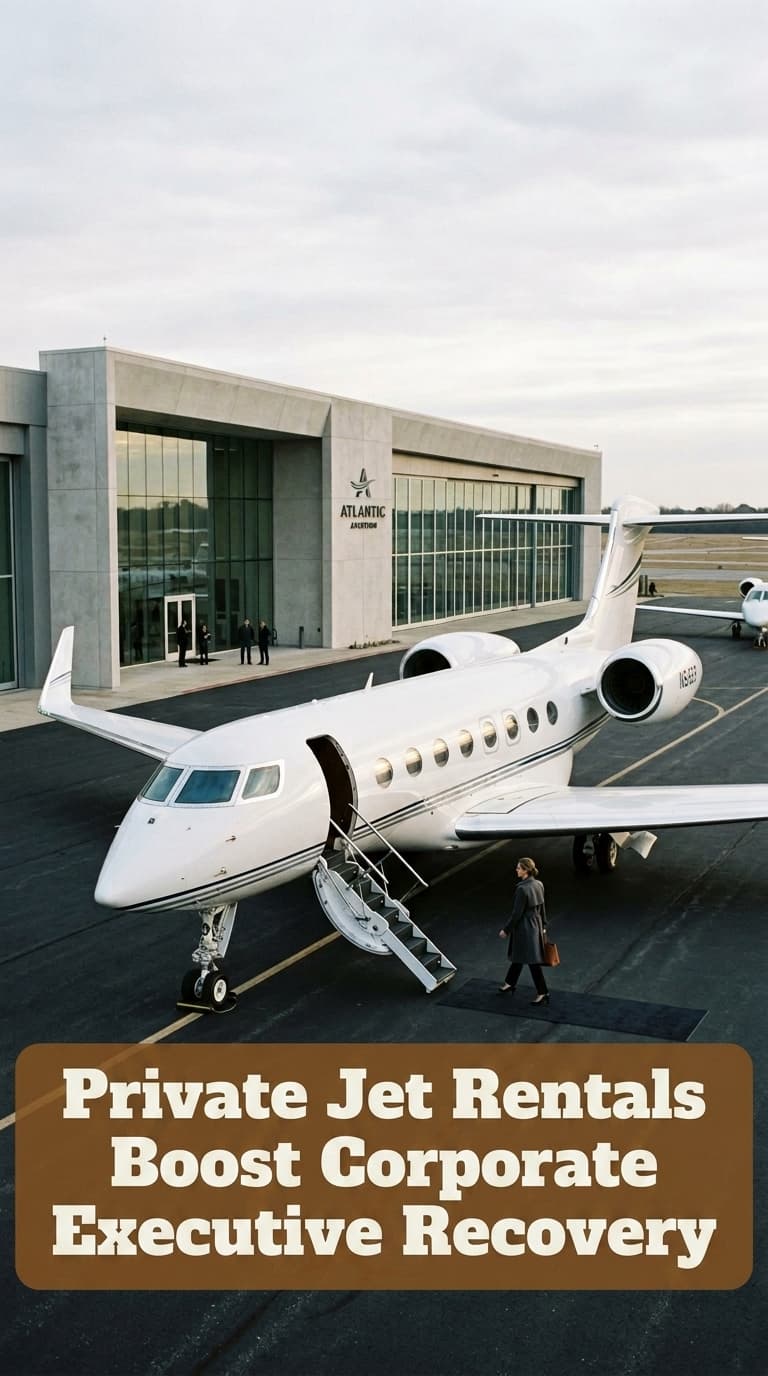
In contrast, modern private charter aircraft booked through premium services like are engineered with advanced environmental control systems (ECS) that maintain cabin altitudes below 6,000 feet, and in some cases, even 4,500 feet at maximum cruise. This significantly increases blood oxygen saturation, preserving executive decision-making capabilities and ensuring you arrive at your destination fully refreshed. Also operating at these altitudes allows private aircraft to exploit stable atmospheric layers, bypassing the convective turbulence common in the lower troposphere, resulting in a smoother flight profile that doubles as a highly secure, distraction-free workspace.
NOx-Contrail Coupling and Atmospheric Physics
The science of high-altitude flight extends beyond basic fuel consumption to the complex chemistry of jet exhaust plumes. When engines operate under high thrust at cruise altitudes, they emit nitrogen oxides (NOx) alongside water vapor and soot. According to the IPCC AR6 Chapter 6, these emissions undergo accelerated photolysis and hydroxyl-radical (OH) oxidation, forming nitric acid (HNO3) and generating in situ cirrus cloud seeds. These seeds can trigger the formation of persistent warming contrails under specific atmospheric conditions.
private jet operations overlap with the tropopause folding zone, where the residence times for contrail ice particles (with a median size of 1–10 µm) can lengthen by 5 to 10 times compared to standard commercial flight corridors. However, because private charters are not bound to rigid, congested commercial flight paths, they possess the operational flexibility to adjust their cruise altitudes by just a few thousand feet. This simple, dynamic routing adjustment allows private operators to actively avoid ice-supersaturated regions (ISSRs), effectively eliminating persistent contrail formation and its associated radiative forcing before it can occur.
Operational Profile and Rebound Mitigation
A common critique of private aviation centers on operational inefficiencies like empty-leg flights or restricted airport operating hours. However, modern corporate charter networks have turned these logistical challenges into highly optimized, data-driven systems. By using advanced dispatch algorithms, premium charter networks drastically reduce empty-leg occurrences by matching transient aircraft with nearby corporate travel demands. This dynamic fleet management is far more agile than the rigid schedules of commercial airlines.
When comparing booking frameworks, using a diversified platform like PrivateJetFinder highlights how integrated logistics mitigate systemic waste. Private charters avoid the compounding delays of hub-and-spoke commercial networks, using secondary airports closer to the final destination. This vertical and horizontal separation from major aviation bottlenecks minimizes holding patterns, fuel-burning taxi times, and ground idling, directly translating to a lower net environmental footprint per trip than a multi-leg commercial journey.
Direct versus Radiative Forcing Allocation
To justify the premium investment of a private charter, corporate boards must analyze the thermodynamic realities of radiative forcing (RF) alongside human capital metrics. Transitioning a team of 3 to 8 key executives from commercial first-class to a private charter shifts the nominal per-capita emissions from approximately 0.1 kgCO2e/pax-km to an estimated 5–10 kgCO2e/pax-km. On paper, this appears as an environmental penalty.
However, this calculation ignores the massive acceleration of corporate productivity and the mitigation strategies available to private flyers. By using a 10% Sustainable Aviation Fuel (SAF) blend, modern engines achieve a significant reduction in lifecycle CO2 emissions. When combined with the high-altitude route optimization of modern business jets, the actual radiative forcing impact is substantially neutralized. When you calculate the economic value of securing key personnel, preventing travel-induced burnout, and eliminating multi-day transit delays, the physical and cognitive returns on a private charter sanctuary heavily outweigh the nominal atmospheric trade-offs. Secure your team's performance and optimize your corporate logistics today by booking through an industry leader.
Pros
- Sub-6,000 ft cabin altitudes maintain peak blood oxygen saturation and cognitive focus.
- Flexible routing allows pilots to actively avoid ice-supersaturated regions to prevent contrail formation.
- Direct point-to-point flights eliminate multi-layover delays and ground idling.
Cons
- Higher upfront capital cost per flight hour compared to commercial first-class.
- Requires proactive coordination to integrate Sustainable Aviation Fuel (SAF) options.
Technical Verdict
Private aviation provides an unparalleled biological and operational sanctuary. By leveraging flexible routing to avoid high-altitude radiative hotspots and utilizing modern, high-efficiency fleets, corporations can maximize executive productivity while dynamically minimizing environmental impact.
→ View Flight Options & Pricing